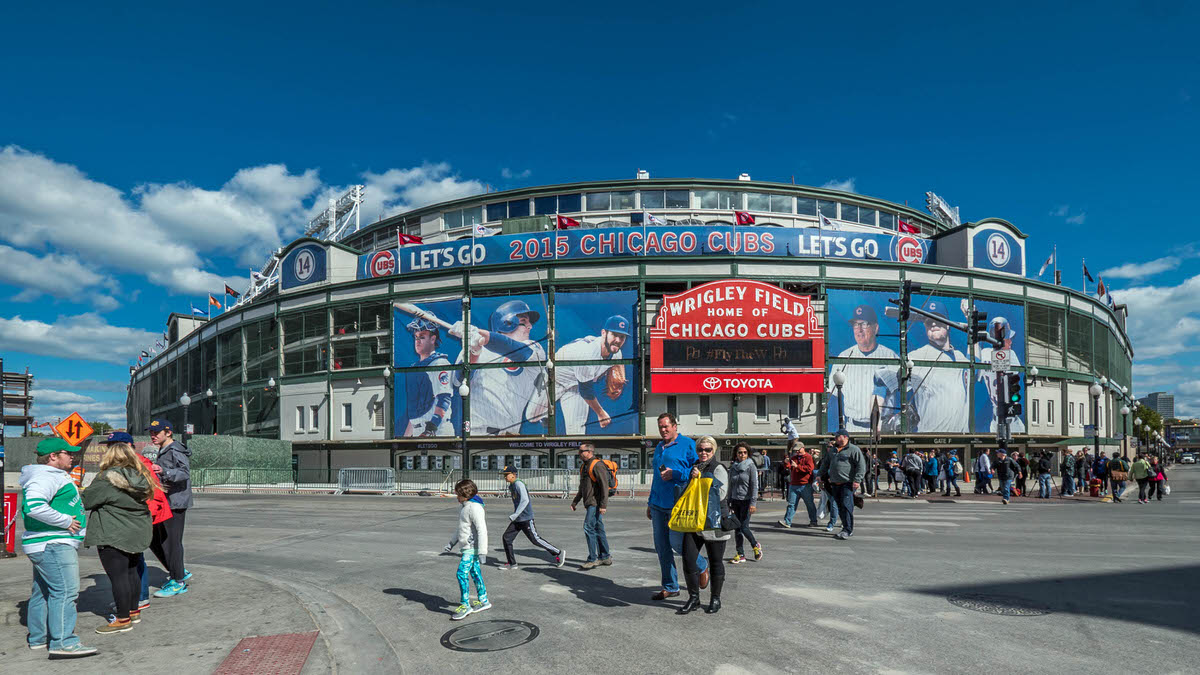
Wrigley Field is one of the few sports venues in America that has genuinely shaped the identity of the neighborhood around it. Most stadiums are destinations you drive to and leave. Wrigley sits in the middle of a dense residential neighborhood, surrounded by apartment buildings, restaurants, and shops that exist in relation to the stadium year-round. If you are searching for an apartment in Lakeview, understanding what it means to live near Wrigley is one of the more important location decisions you will make.
This guide gives prospective renters an honest picture of game day living near Wrigley, and what to pay attention to when evaluating apartments in this part of the neighborhood.
What Game Day Living Actually Feels Like
On a weekday afternoon when the Cubs have a 1:20 PM start, Clark Street fills with fans before noon. Bar patios along Addison are at capacity before first pitch. The neighborhood energy shifts in a way that is genuinely distinct from an ordinary Tuesday.
By September during a playoff push, that energy intensifies considerably. Night games bring a different, louder crowd. The hour after a game ends, when a full stadium disperses through the surrounding streets, is audible from most apartments within a few blocks.
Traffic on Clark, Addison, and Sheffield during and after games is significant. Street noise on game nights is real. Most long-term residents describe reaching a point where the schedule simply becomes part of how they think about the month. The Cubs schedule is published well in advance, and residents check it the way others check the weather, as useful context for planning how to use the neighborhood on a given day.
What to Look for When Choosing an Apartment Near Wrigley
Apartment selection near Wrigley involves considerations that do not apply to most other Chicago neighborhoods. Before touring, add these to your evaluation criteria:
- Floor level — Ground and second floor units on the main commercial streets absorb the most game-day noise. Higher floors buffer considerably more sound and often come with stadium or skyline views.
- Unit orientation — An apartment facing a residential side street will have a fundamentally different game-day experience than one facing Clark or Addison, even within the same building. Ask specifically which direction the primary windows face.
- In-unit air conditioning — Summer games coincide with Chicago’s hottest months. Individually controlled in-unit cooling matters between June and August.
- Parking — Know whether your building offers dedicated parking, whether it is covered or surface level, and what getting in and out looks like during and after a game.
- Home office placement — If you work from home, a workspace facing a courtyard or residential side street performs significantly better on weekday afternoon game days than one facing the stadium-adjacent blocks.
The Cubs Schedule and Your Daily Routine
The Cubs play 81 home games per season, roughly three to four per week from late March through September. That is a meaningful number of days when the neighborhood around the stadium operates differently.
Day games on weekdays, which the Cubs schedule more frequently than most MLB teams, affect daytime energy for anyone working from home. Night games and weekend games bring larger, louder crowds. Friday night games tend to draw the most energetic attendance of the week.
Most residents adapt quickly. The variability becomes predictable, and the schedule becomes useful information rather than a surprise.
Restaurants, Bars, and Getting Around
The dining and bar scene around Wrigley is one of the most concentrated in Chicago, and it has to be good year-round, not just on game days. The stretch of Clark Street north through Boystown and into Lakeview proper is one of the stronger dining corridors on the North Side, covering a wide range of cuisines and price points.
The Red Line’s Addison stop sits directly across from Wrigley’s main entrance. Post-game trains fill quickly. Residents who commute by Red Line learn to leave before the seventh inning or wait thirty to forty minutes after the game ends. Driving near the stadium during the two-hour window around game time is consistently slower, and most residents with cars learn to plan accordingly. Cycling via the lakefront trail bypasses most of the congestion entirely.
The Off-Season and Year-Round Liveability
From November through March, the neighborhood returns to its baseline character as a walkable North Side corridor. The restaurants and bars operate at a pace that feels genuinely residential, and the streets around the stadium are quiet in a way that surprises people who have only seen Wrigleyville during the season.
Wrigley now hosts concerts and other large events year-round, so the game-day dynamics apply beyond baseball season. Checking the stadium calendar periodically is worth doing regardless of the time of year.
The deeper point is that Lakeview is a genuinely livable neighborhood independent of baseball. Red Line access, walkable retail and dining, Lincoln Park to the south, and the lakefront to the east make this one of the more convenient North Side locations whether or not the Cubs are playing.
Find Lakeview Apartments Near Wrigley Field With PPM
PPM has offered apartments in Lakeview for decades, with properties at varying distances from Wrigley Field. Some sit within a few blocks of the stadium. Others are positioned further south or east, closer to the lakefront or the Brown Line, offering the character of Lakeview with more residential distance from the stadium.
Browse Lakeview apartments from PPM to compare available units and locations, and reach out to the leasing team to ask which properties best fit your priorities around game-day living.


