One of the most compelling reasons to rent in Lincoln Park is access to green space that most Chicago neighborhoods simply cannot match. The neighborhood sits adjacent to one of the largest urban parks in the United States, and that proximity shapes daily life in ways renters consistently describe as one of Lincoln Park’s defining qualities. This guide covers the natural spaces that make the neighborhood distinctive, from well-known landmarks to quieter spots that longtime residents tend to treasure most.
Lincoln Park: One of the Largest Urban Parks in the Country
Stretching from Kathy Osterman Beach on the north to Ohio Street Beach on the south, Lincoln Park totals 1,188 acres along the lakefront. For residents of the Lincoln Park neighborhood, the park is not a destination you occasionally visit. It is part of your daily environment. The running paths, cycling routes, and open lawn spaces along the lakefront are accessible within a short walk of most apartments in the neighborhood, and many residents integrate them into https://ppmapartments.com/wp-admin/upload.phptheir morning and evening routines in a way that simply is not possible in more landlocked Chicago neighborhoods.
The Lakefront Trail and North Avenue Beach
The lakefront trail running through Lincoln Park is one of the most practical and scenic recreational routes in the city. It connects north toward Evanston and south toward the Museum Campus and Grant Park along a protected path that separates cyclists and pedestrians from traffic. For residents who cycle to work or run regularly, the trail is a year-round asset that requires no navigation and stays accessible in all but the most severe winter conditions.
North Avenue Beach sits at the southern edge of the Lincoln Park neighborhood and is one of Chicago’s most active beaches during summer months. It offers sand volleyball courts, kayak and paddleboard rentals, and a beach house with food service. Fullerton Avenue Beach, slightly further north, provides a quieter alternative with direct lake access and views toward the city skyline. Both are within walking distance of most PPM Lincoln Park properties.
The Alfred Caldwell Lily Pool: Lincoln Park’s Hidden Landmark
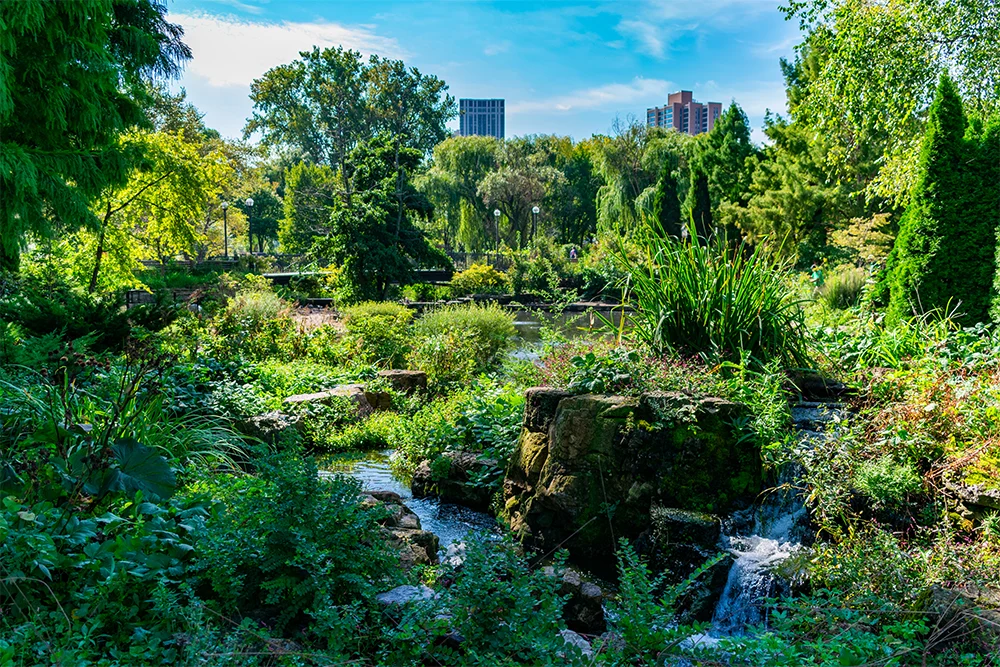
One of the most distinctive and least-known natural spaces in the neighborhood is the Alfred Caldwell Lily Pool at 125 W. Fullerton Parkway. Designed by landscape architect Alfred Caldwell in the Prairie School style in the 1930s, the Lily Pool is a hidden garden designed to resemble a river meandering through a great Midwestern prairie. A stone walk encircles the pool, leading past a pavilion, council ring, and diverse native plantings. Birds, dragonflies, butterflies, frogs, and turtles are regular inhabitants.
The Lily Pool was designated a Chicago Landmark in 2002 and listed on the National Register of Historic Places and as a National Historic Landmark in 2006. It is free to enter and open daily from 7:30 AM to 7:30 PM or dusk.
Despite its landmark status, the Lily Pool remains genuinely off the radar for many Chicagoans and even some Lincoln Park residents. Longtime residents describe it as the kind of place you can visit on a Tuesday afternoon and find nearly to yourself.
The Lincoln Park Conservatory
Located at 2391 N. Stockton Drive, the Lincoln Park Conservatory is a Victorian-era glass house featuring four greenhouse rooms. The Palm House is filled with towering palms and tropical plants. The Fern Room showcases a diverse collection of ferns and cycads. The Orchid House features a koi pond surrounded by orchids and bromeliads. The Show House hosts rotating seasonal displays during the Spring and Winter Flower Shows.
The Conservatory is free to enter and open daily from 9 AM to 5 PM. It is particularly worth knowing about during Chicago winters, when the heated glass rooms offer a rare opportunity to be surrounded by living greenery without leaving the neighborhood.
North Pond Nature Sanctuary
North Pond is located along Stockton Drive north of Fullerton and is a designated nature sanctuary within the park. It is a popular destination for birdwatchers, with a diverse population of migratory birds making it a reliable spot during spring and fall migration seasons. The casting pier at the south end of the pond, originally constructed in 1946, remains a landmark for anglers and adds to the area’s sense of unhurried, neighborhood-scale outdoor life.
Oz Park
Oz Park is located at Webster and Larrabee and provides playing fields, a playground, and a set of bronze sculptures depicting characters from L. Frank Baum’s Wizard of Oz series. Baum lived in the Lincoln Park neighborhood while writing the books, and the park’s theme is a nod to that local history. It is a well-used neighborhood park without the crowds of the lakefront areas, and its baseball diamonds and open lawn make it a practical outdoor space for residents who want something closer to home than the main park corridors.
The Peggy Notebaert Nature Museum
Situated along Fullerton Avenue at the edge of the park, the Peggy Notebaert Nature Museum focuses on the natural history of the Chicago region and offers educational programs for residents of all ages. It is best known for its butterfly haven, a year-round indoor habitat where visitors walk among hundreds of live butterflies. The museum sits adjacent to North Pond, making it a natural pairing with a walk through the nature sanctuary.
How Green Space Shapes Daily Life for Lincoln Park Residents
The cumulative effect of all this accessible green space is something renters often describe after moving to Lincoln Park as one of the surprises of the neighborhood. Most people know about the zoo and the lakefront trail before they move there. Fewer anticipate how much the Lily Pool, North Pond, the Conservatory, and Oz Park collectively shape the texture of daily life.
For renters who run, walk, or cycle as part of their regular routine, the variety of routes and destinations within the neighborhood means that the same outdoor space rarely has to feel repetitive. The lakefront trail, the park interior paths, the neighborhood streets, and the smaller sanctuaries all offer distinct experiences within a compact geographic area.
Find Lincoln Park Apartments With PPM
PPM’s Lincoln Park apartments place residents within easy reach of all the green spaces covered in this guide. Browse available units and building locations across the neighborhood, and reach out to the leasing team to ask which properties are closest to the park access points and lakefront trail.


